

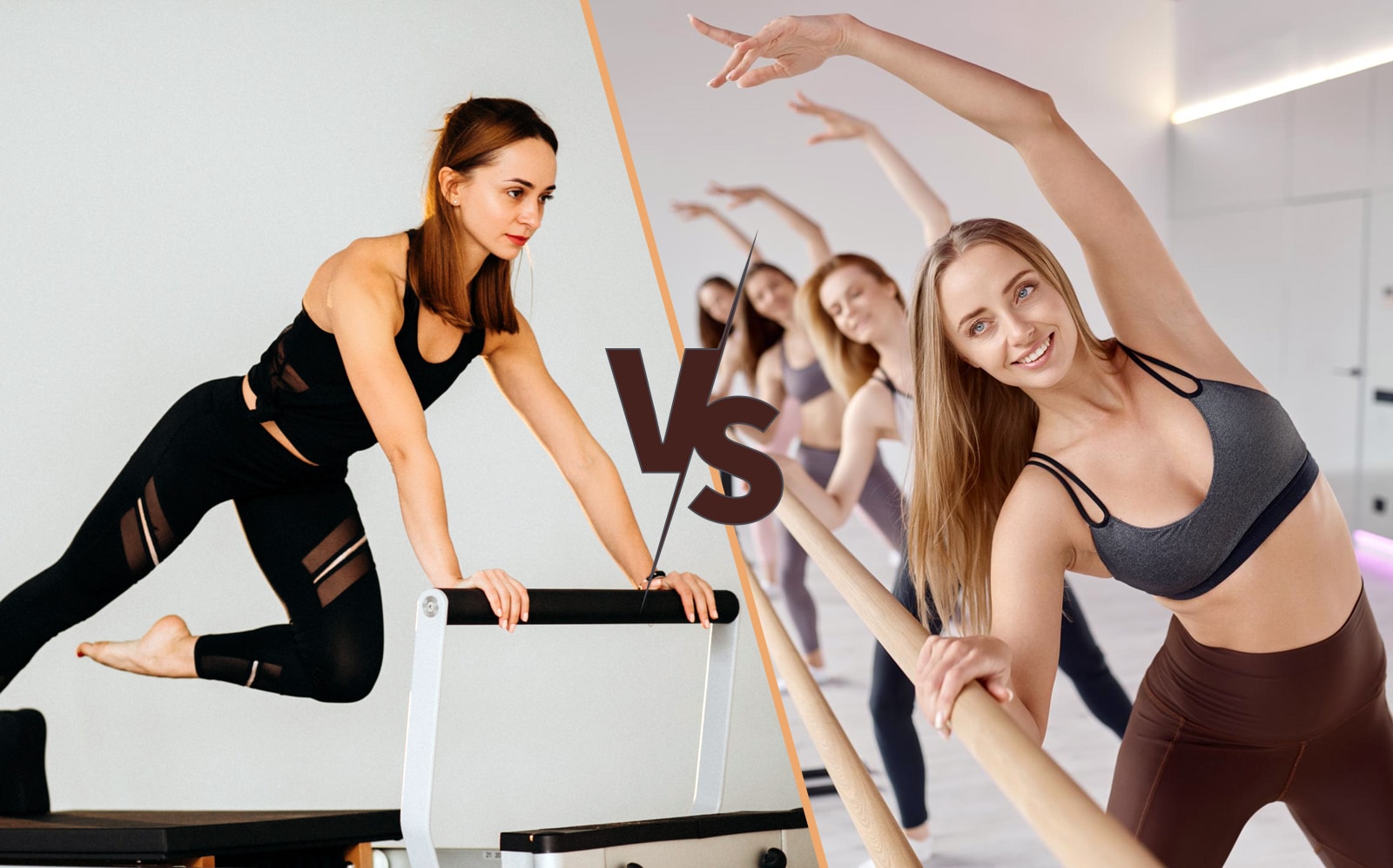
Barre Pilates combines ballet-inspired moves with Pilates basics for a dynamic, rhythmic workout that emphasizes muscular endurance, flexibility, and balance. In contrast, traditional Pilates uses controlled, precise motions—often on a mat or apparatus—to strengthen the core, improve posture, and enhance mind-body awareness. Barre Pilates suits those seeking energetic, dance-like routines, while traditional Pilates is ideal for building deep stability and mindful movement. Discover how each style supports different fitness goals and personal preferences next.

Barre Pilates vs Pilates: What’s the Real Difference?
What distinguishes Barre Pilates from traditional Pilates? Barre Pilates fuses ballet-inspired moves with Pilates fundamentals, offering a unique blend of dynamic movement and muscular endurance.
In contrast, traditional Pilates centers on precise, controlled exercises aimed at enhancing core strength and flexibility. The barre pilates vs pilates debate hinges on their different approaches: Barre Pilates infuses rhythm and energy, while Pilates maintains a focused, mindful pace.
Each method delivers distinctive benefits and caters to those seeking a personalized path to fitness. For individuals craving variety and self-expression, Barre Pilates expands the possibilities beyond the classical framework of a typical Pilates workout.
Movement Styles and Core Focus: How Each Workout Trains Your Body
Through the lens of movement and core engagement, Barre Pilates and traditional Pilates offer distinctly different training experiences.
Traditional Pilates emphasizes controlled, flowing movements, often performed on a mat or specialized apparatus, with a strong focus on core stability and precise alignment.
In contrast, Barre Pilates infuses ballet-inspired positions and pulses, blending dynamic, upright movements with isometric holds.
The pilates workout comparison reveals that Barre Pilates creates a rhythmic, dance-like energy, while traditional Pilates remains grounded in deliberate, mindful motion.
Each approach empowers individuals to explore movement freely, shaping the body through unique patterns of core activation and muscular coordination.
Barre Pilates Benefits: Endurance, Flexibility, and Balance
Building on the distinct movement patterns found in Barre Pilates, this method stands out for its ability to enhance endurance, flexibility, and balance. Barre Pilates utilizes small, repetitive movements and sustained holds, challenging the muscles to work longer and adapt to fatigue. This endurance focus supports individuals seeking workouts that build stamina and resilience.
The integration of ballet-inspired stretches increases flexibility, allowing greater freedom of movement. Additionally, the constant need for balance sharpens coordination and stability https://la-pilatesstudio.com/mat-group-class/, encouraging a sense of physical autonomy. Barre Pilates offers a dynamic experience for those desiring workouts that promote fluidity, control, and personal empowerment.
Traditional Pilates Benefits: Core Strength and Posture
A hallmark of traditional Pilates lies in its unwavering emphasis on core strength and postural alignment.
This style of movement cultivates a strong foundation, allowing individuals to move with greater ease and confidence.
By focusing on precise, controlled motions, traditional Pilates offers a liberating pathway to improved body mechanics.
The following key benefits often appeal to those seeking physical autonomy:
- Enhanced core stability, which supports everyday movement.
- Improved posture, reducing strain and tension.
- Greater mind-body awareness, fostering intentional movement.
- Reduced risk of injury through balanced muscular development.
Traditional Pilates empowers practitioners to build resilient bodies and move through life freely.
Choosing Between Barre Pilates and Traditional Pilates for Your Fitness Goals
While traditional Pilates offers clear advantages in core strength and postural improvement, individuals often consider how each Pilates style aligns with their unique fitness objectives.
Barre Pilates appeals to those seeking dynamic, ballet-inspired movement and enhanced muscular endurance, blending flexibility with cardiovascular elements. In contrast, traditional Pilates emphasizes mindful, controlled exercises targeting deep stabilizing muscles and balanced alignment.
When exploring barre Pilates vs Pilates, the choice centers on personal preference: freedom to pursue energetic, dance-like routines or a focus on classical technique and core mastery. Each method presents distinct benefits, allowing people to select the Pilates workout experience that best supports their aspirations.
Conclusion
To summarize, both barre Pilates and traditional Pilates offer distinct advantages, each catering to different fitness needs. While barre Pilates infuses energetic, ballet-inspired movements to boost endurance and balance, traditional Pilates centers on precise, controlled motions for core strength and posture. Understanding the unique benefits of each approach empowers individuals to choose the method that best supports their personal goals, ensuring a rewarding and effective workout experience tailored to their preferences and aspirations.